
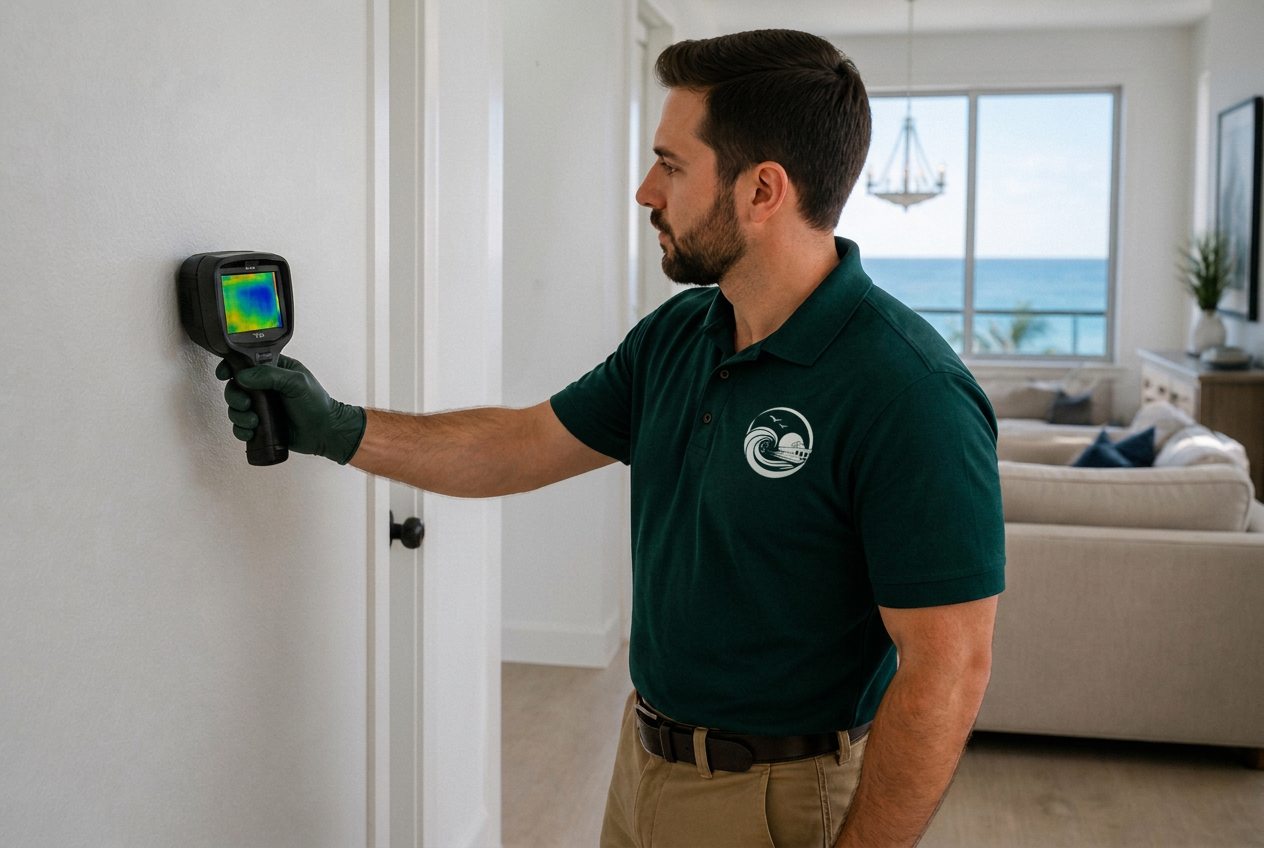
Manhattan Beach, California · Service Area Business
Professional Mold Inspection & Mold Testing in Manhattan Beach
Accurate mold testing, certified laboratory analysis, and detailed inspection reports. We inspect and test only — never remediation — so what we find stays independent.
- ✓ Independent — no remediation sales
- ✓ Certified lab analysis
- ✓ Detailed written reports
- ✓ Manhattan Beach only
We follow published industry and public-health guidance
180+ five-star reviews
Trusted by Manhattan Beach homeowners

“After a musty smell appeared in our beach cottage, they came out the same week, tested the air and surfaces, and the lab report explained everything clearly. No scare tactics, just facts. Worth every penny for the peace of mind.”
Mold inspection and testing services in Manhattan Beach
Every service below is testing, documentation and interpretation. We never sell mold removal, which is exactly why property owners, buyers, landlords and tenants use us as the neutral party.
Mold Inspection
A full visual and moisture inspection of your property, room by room, with findings written down in plain English.
Learn more →Mold Testing
Air and surface samples analyzed by an accredited laboratory, with results explained in language you can use.
Learn more →Indoor Air Quality Testing
A measured picture of what is in the air you breathe indoors, and which building conditions are driving it.
Learn more →Moisture Detection
Find the water before you worry about the mold — mapped, measured and photographed.
Learn more →Air Sampling
Calibrated spore trap sampling with an outdoor control, so your indoor numbers actually mean something.
Learn more →Surface Sampling
Tape lift and swab sampling that confirms whether that discoloration is mold — and which kind.
Learn more →Thermal Imaging
Infrared scanning that shows temperature patterns behind finishes — the fastest way to find where to look closer.
Learn more →Residential Mold Inspection
Whole-home inspection for houses, condos, townhomes and rentals, built around how people actually live in them.
Learn more →Commercial Mold Inspection
Documented inspection and testing for offices, retail, restaurants, medical suites and multi-unit buildings.
Learn more →Real Estate Mold Inspection
Escrow-timed inspection and testing for buyers, sellers and agents — fast, neutral, and documented.
Learn more →Post Water Damage Mold Inspection
After a leak, flood or overflow — verify the structure actually dried before the walls get closed.
Learn more →Post Remediation Verification
Independent clearance testing that confirms remediation worked — before containment comes down and walls go back up.
Learn more →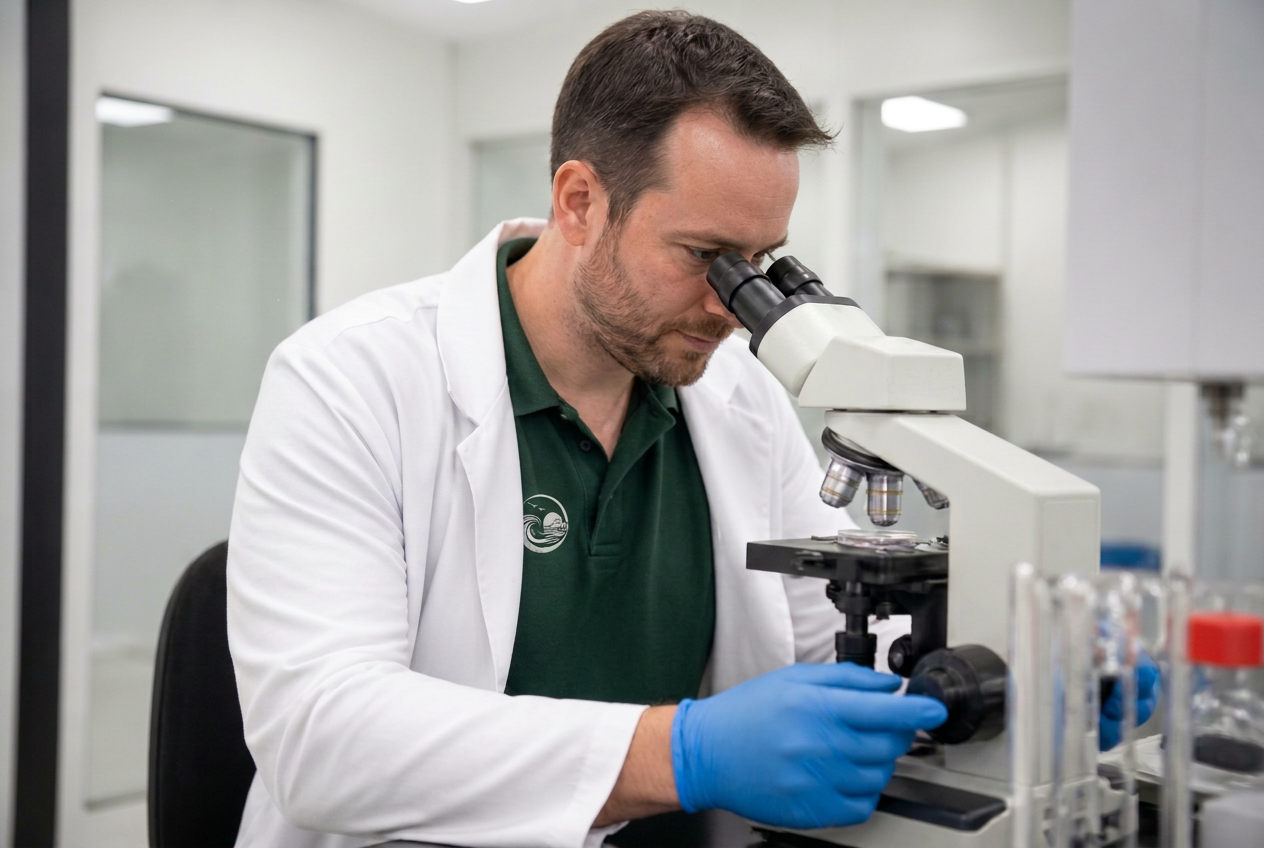
Independent testing, certified laboratory analysis
Samples we collect go to an independent accredited environmental laboratory under documented chain of custody. We don't analyze our own samples and we don't bid on removal work, so there is no path by which a bigger result benefits us.
Results arrive with the lab's original data attached, plus our interpretation against the same-day outdoor control sample. If your numbers look ordinary, the report says so. If they don't, it explains what the pattern suggests and where we'd look next.
Read more about our mold testing methods or how air sampling works.
Call for Independent Testing — (424) 560-1210How an inspection works
Talk it through
We ask about leaks, remodels, odors and which rooms feel different. History narrows the search before we arrive.
Inspect and measure
Room-by-room visual assessment, moisture mapping, thermal imaging and humidity readings, all photographed.
Sample where it matters
Air and surface samples with an outdoor control, collected under chain of custody and sent to an accredited lab.
Report you can act on
Findings, lab data, likely moisture source and a recommended scope you can hand to remediation contractors.
Why Manhattan Beach homes get mold
Living three blocks from the water is wonderful and hard on buildings. Marine layer humidity sits over the neighborhood most mornings, salt air works on flashing and fasteners, and wind-driven rain finds the west-facing details first. Add a housing stock that ranges from 1940s cottages over crawl spaces to airtight new construction, and you get a very specific set of recurring moisture failures.
We see the same shortlist over and over: shower pans leaking into the ceiling below, stucco weep screeds buried by hardscape, converted garages with no vapor control, bath fans terminating into attics, and HVAC condensate lines quietly overflowing in a closet. Knowing that list is why our inspections find things faster.
Because we're a service area business working only in Manhattan Beach, we're not learning your neighborhood on your appointment. More about how we work →
Call a Local Inspector — (424) 560-1210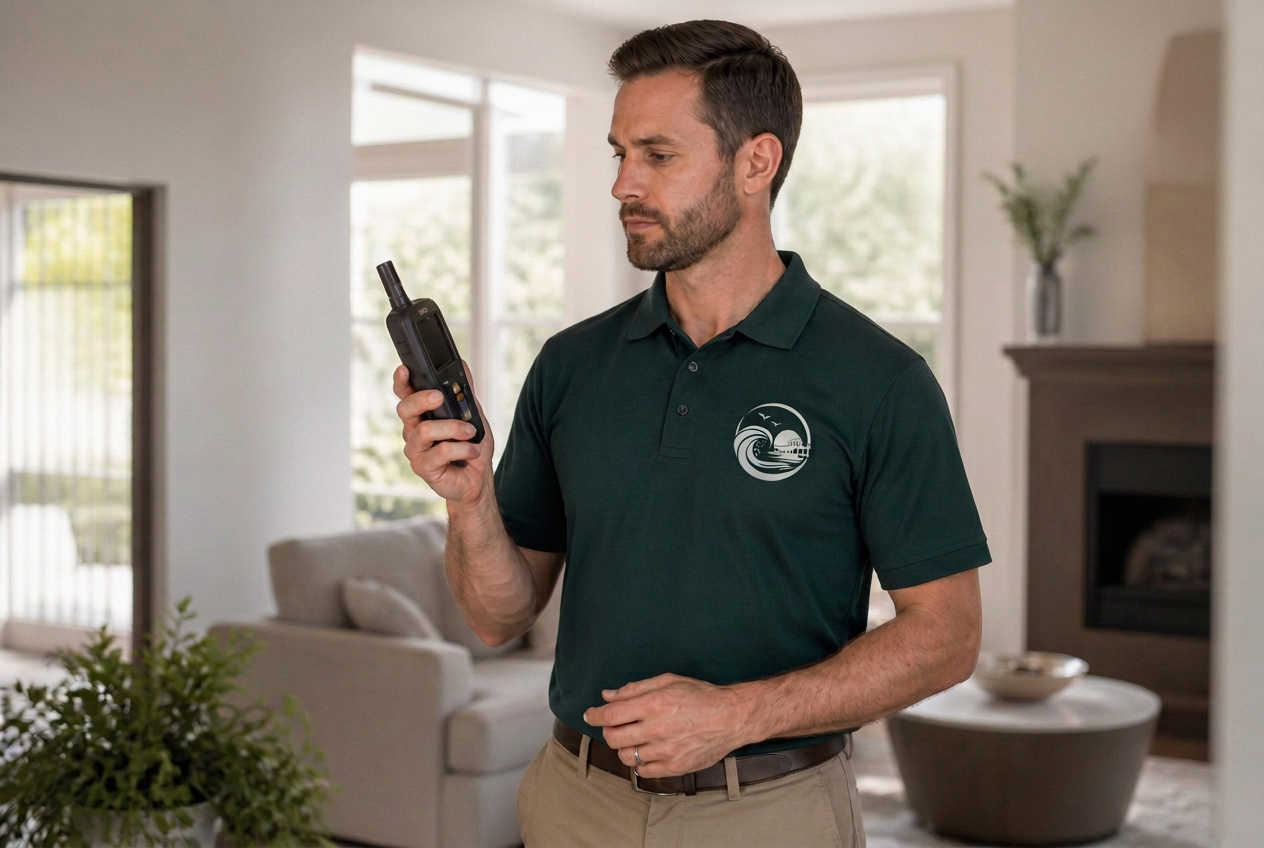
Serving you at your property
We're a service area business — our inspectors come to your home or building in Manhattan Beach. We don't receive customers at our address.
1112 Ocean Dr #102-AManhattan Beach, CA 90266Call Now — (424) 560-1210
Hours
- Sunday – ThursdayOpen 24 Hours
- Friday6:00 AM – 6:00 PM
- SaturdayClosed
Frequently Asked Questions
Straight answers about mold inspection, mold testing and indoor air quality in Manhattan Beach.
How much does a mold inspection cost in Manhattan Beach?
Pricing depends on the size of the property, how much of it needs moisture mapping, and whether laboratory samples are collected. We quote one flat number before scheduling, and laboratory fees for agreed samples are included in it — no surprise line items afterward.
Do I need mold testing after a water leak?
Not always. If the water was clean, addressed within a day or two, and the structure was verified dry, moisture verification may be enough. Testing makes sense when water sat for days, when the source was contaminated, or when odors or symptoms are present.
How long does mold testing take?
Sample collection usually takes under an hour after the inspection. Accredited laboratory analysis typically returns in two to three business days, and expedited processing is available for escrow deadlines.
What's the difference between mold inspection and mold testing?
Inspection is the investigation: visual assessment, moisture mapping and thermal imaging to find where water is and where growth is likely. Testing is laboratory sampling that identifies which spore types are present and at what concentrations. Most jobs start with inspection and add testing where it answers a specific question.
Can mold grow behind walls?
Yes, and hidden cavity growth is one of the most common situations we investigate. A slow supply-line drip or a failing shower pan can feed growth inside a wall for months with no visible sign beyond a faint musty smell on humid mornings.
Is air sampling worth it?
It is worth it when it answers a question — whether indoor spore levels are elevated compared with outdoor air, whether a remediated area passed clearance, or whether a symptom pattern has an environmental correlate. It is not a substitute for locating the moisture source.
What happens after I receive my lab report?
We walk through it with you by phone, explain what each result means relative to the outdoor control sample, and outline a recommended scope of work. Because we don't perform removal, you take that scope to remediation contractors for independent bids.
Do you remove mold as well as test for it?
No. We perform inspection and testing only. Keeping removal out of our business is what makes our findings independent — the company telling you the size of the problem has no financial interest in it being larger.
How quickly can you come out?
We're available 24 hours Sunday through Thursday and until 6 PM on Friday, so most inspections are scheduled within a day or two. Urgent water-damage calls are prioritized.
Do you serve only Manhattan Beach?
Yes. We're a service area business focused on Manhattan Beach, California. Working one city means we know the local housing stock, the coastal humidity pattern and the moisture failures that repeat here.
What does black mold inspection involve?
The same process as any mold inspection: moisture mapping, thermal imaging and a visual assessment, plus sampling if identification matters. Only laboratory analysis can confirm whether growth is Stachybotrys — colour alone tells you nothing reliable.
Can you find hidden mold without cutting into the wall?
Usually. Thermal imaging plus pinless moisture meters locate damp cavities non-destructively. Where confirmation of what is growing inside is needed, we discuss a small wall cavity sample port with you first and place it where repair is simplest.
Should I test before buying a home in Manhattan Beach?
It's worth it when the general home inspection notes moisture, past water damage or a musty odor, and increasingly common as standard due diligence on older coastal properties with crawl spaces or additions.
Is there a legal safe level of mold in California?
No. California sets no numerical exposure limit for indoor mold, which is why interpretation depends on comparing indoor samples with a same-day outdoor control rather than against an official threshold.
Why does my home smell musty when I can't see any mold?
Musty odor comes from microbial volatile organic compounds released by active growth, often inside a wall, under flooring or in a crawl space. Smelling it without seeing it is a classic signal for moisture mapping.
Does homeowners insurance cover mold inspection?
It depends on the policy and whether the mold results from a covered sudden water event. Many carriers accept independent assessment as part of a claim, and our documentation is prepared to support one. Confirm specifics with your adjuster.
How often should indoor air quality be tested?
There's no fixed schedule for a healthy building. Testing makes sense after water damage, after a remodel, before a purchase, when symptoms appear, or when a tenant or employee raises a documented concern.
Can I use a DIY mold test kit from the hardware store?
Settle plates grow something in nearly any home because spores exist in all indoor air. Without a calibrated air volume, an outdoor control and laboratory identification, the result can't be interpreted in a way anyone should act on.
Do you do post-remediation clearance for work another company performed?
Yes, and that's exactly how it should work. Verification should always come from a party with no stake in the removal work, whichever contractor performed it.
What should I do before the inspector arrives?
Keep exterior windows and doors closed for a few hours if air sampling is planned, clear access to under-sink cabinets, the attic hatch and any crawl space entry, and make a short list of past leaks, remodels and the rooms that feel or smell different.
Trusted mold resources
Independent guidance on mold, moisture and indoor air quality from public agencies and industry bodies:
- EPA guide to mold inspection and moisture controlU.S. Environmental Protection Agency — mold cleanup, prevention and when to test.
- CDC mold testing and health informationCenters for Disease Control and Prevention — mold, dampness and health basics.
- AIHA mold inspection consumer resourcesAmerican Industrial Hygiene Association — guidance from accredited professionals.
Schedule a mold inspection in Manhattan Beach
Independent testing, certified laboratory analysis, and a report you can act on.