
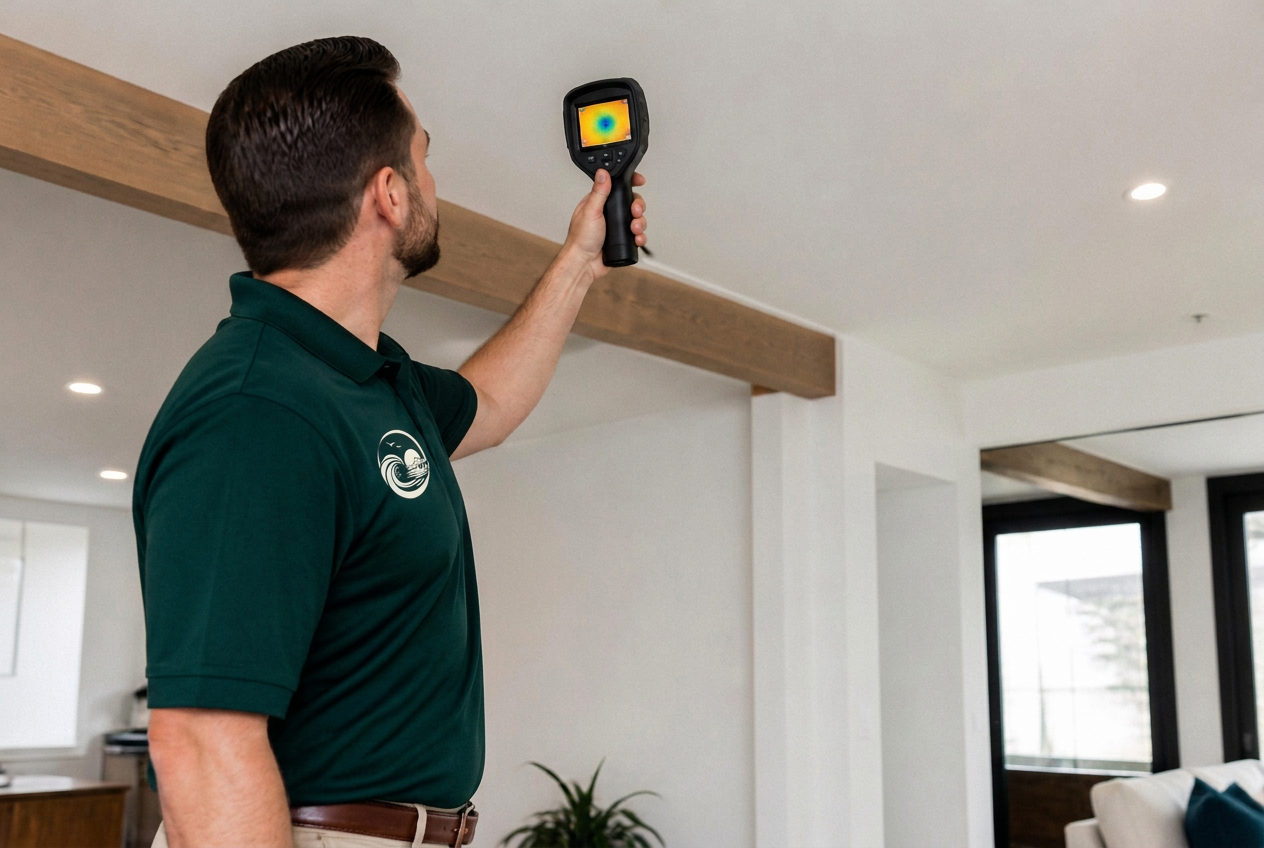
A thermal camera does not see mold and it does not see through walls. What it sees is surface temperature. Wet building materials conduct heat differently and cool as moisture evaporates, so a damp area within a wall or ceiling usually shows up as a distinct cooler pattern with a shape that matches how water travels — a plume below a window, a fan spreading from a pipe penetration, a straight line along a top plate.
Used correctly, that makes infrared the most efficient scanning tool we own. It lets us cover an entire property quickly, then spend our meter time only where the images justify it. Used carelessly, it produces false alarms, which is why every thermal anomaly we report is confirmed with a moisture meter before it becomes a finding.
What thermal imaging reveals
Across Manhattan Beach properties, the same patterns recur often enough that experienced interpretation matters as much as the equipment.
- Active plumbing leaks inside walls, ceilings and under slabs
- Roof leaks tracking along framing far from the actual entry point
- Window and door flashing failures on weather-exposed elevations
- Missing or displaced insulation that creates cold surfaces where condensation forms
- HVAC duct leakage and condensation in humid enclosed spaces
- Shower pan and tile assembly failures on the room behind the bathroom
- Thermal bridging at framing that produces recurring surface mold in the same spot each winter
Getting the conditions right
Infrared needs a temperature difference to work with. When indoor and outdoor temperatures are nearly identical and the HVAC has been off, contrast can be too low to read reliably. We schedule around that, and where necessary we run the system or wait for a better window rather than delivering a scan that cannot be trusted.
We also account for the false positives that fool inexperienced operators: sunlight warming a wall through a window, recently occupied furniture, plumbing carrying hot water, and the natural cooling around ductwork. Every one of those can mimic moisture on screen.
Always confirmed with moisture readings
A thermal image is a lead, not a conclusion. Anything that looks like moisture gets confirmed with a pinless meter and, where appropriate, pin readings. Only confirmed findings go in the report, with both the infrared image and the corresponding meter reading shown together so anyone reading later can follow the logic.
Why it saves money
The alternative to scanning is exploratory demolition. Opening drywall to find a leak is slow, dusty, and expensive to repair, and it frequently misses because the wet spot is not where the stain is. A thermal scan narrows the search to a small area before anyone picks up a saw, which means less repair, less disruption and a much smaller remediation footprint if one turns out to be needed.
Working with a local Manhattan Beach inspector
We are a service area business. Our inspectors travel to your property in Manhattan Beach rather than receiving visitors at an office, and we keep our work inside this one city so we know its housing stock, its weather patterns and its building department expectations. You can read more about our inspectors and standards, browse related work such as Moisture Detection, Mold Inspection and Post Water Damage Mold Inspection, or contact us to schedule. Common questions are answered on our homepage FAQ.