
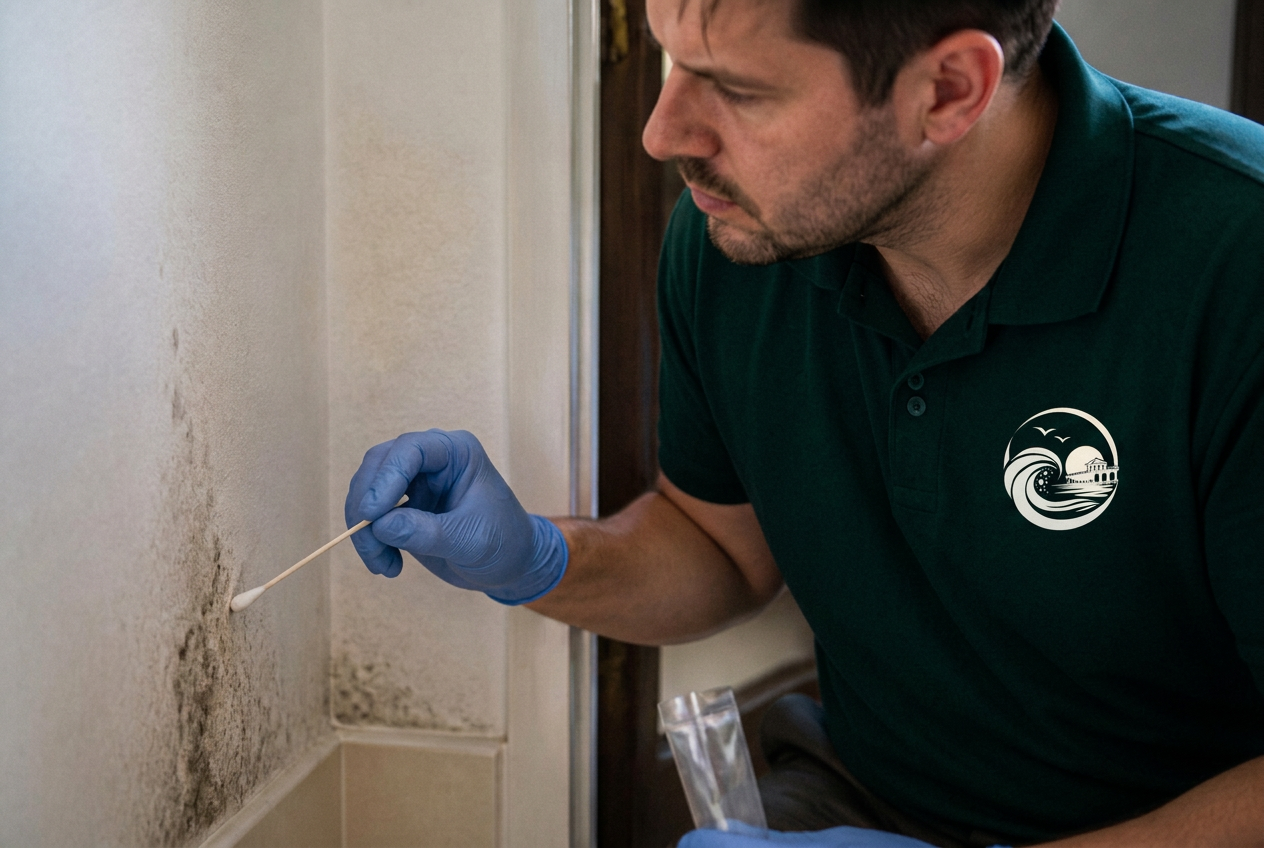
Not every dark patch is mold. Soot from candles, mineral efflorescence on masonry, adhesive residue, dust shadowing on cold framing and old water staining all get mistaken for growth, and each one calls for a completely different response. Surface sampling settles it with laboratory identification rather than a guess.
We use two methods depending on the material. A tape lift presses clear adhesive film against a smooth surface and captures fungal structures intact — the preferred method when it works, because the analyst can see whether spores are actively growing on the material or merely settled on it. A swab is used on textured, porous or irregular surfaces where film will not seat properly.
When surface sampling is the right test
Surface sampling answers a narrow question very well: what is this material, and is it growing?
- Confirming that visible discoloration on drywall, tile grout, wood or trim is fungal growth
- Identifying the genus present so the report reflects what is actually there
- Distinguishing active growth from settled spores or non-biological staining
- Documenting a condition for a landlord, buyer, seller or insurer
- Checking cabinet interiors, closet walls, window sills, attic sheathing and crawl space framing
- Supporting an air sampling result with a physical source sample
Tape lift versus swab
Tape lifts preserve the structural relationship between the spores and the material, so an analyst can report whether hyphal growth is present rather than just spore presence. We use them on painted drywall, finished wood, glass, tile and smooth plastics.
Swabs collect from rough concrete, stucco, unfinished framing, grout lines, duct interiors and tight corners. Both go to the same accredited laboratory under chain of custody, and both typically return in two to three business days.
What surface results do and do not prove
A positive surface sample confirms growth on that specific spot. It does not tell you how large the affected area is, whether spores are airborne, or whether the rest of the building is affected — those questions belong to moisture mapping and air sampling. Conversely, a negative surface result on one patch does not clear the room.
We are direct about this because over-reading a single sample is one of the most common ways people end up paying for the wrong scope of work.
Pairing surface and air data
The strongest reports combine both. If a wall shows Aspergillus growth on a tape lift and the room's air sample shows Aspergillus elevated well above the outdoor control, you have a source and a pathway — a clear, defensible picture for a remediation scope. If the surface is positive but the air is at background, that suggests contained growth that has not yet become an airborne issue, which changes the urgency and the containment plan.
Working with a local Manhattan Beach inspector
We are a service area business. Our inspectors travel to your property in Manhattan Beach rather than receiving visitors at an office, and we keep our work inside this one city so we know its housing stock, its weather patterns and its building department expectations. You can read more about our inspectors and standards, browse related work such as Mold Testing, Air Sampling and Mold Inspection, or contact us to schedule. Common questions are answered on our homepage FAQ.